
The Number Hidden in '2001: A Space Odyssey'
[This article is also available as a video.]
In his novel 2001: A Space Odyssey, Arthur C. Clarke mentioned a ratio related to the dimensions of the monolith three times. Three separate times. That ratio was 1 : 4 : 9. And that same ratio also turns up in a 1989 physics paper on quantum gravity. It shows up in my book on the ancient Solfeggio musical scale. And it shows up in something even stranger still: the measurement of a substance that briefly escaped the proverbial matrix, leaving behind 5/9ths of its weight.
But before we get to that, let's talk about what a matrix actually is. Because that movie, The Matrix, tells you one thing while it shows you something else entirely.

In the 1999 film, Morpheus describes the matrix as a prison built as a digital simulation that's everywhere, invisible, and generating the reality around us... kind of like the grid pattern Homer Simpson finds when he jumps to 3D. That's what The Matrix is telling us, but it's showing us a second matrix, completely without comment.
The word matrix is ancient and its original meaning was "womb." The root mat refers to "mater" or "mother." The pods in the movie encasing a human body in fluid and membrane are all matrices in the original sense: wombs for growing a human, but also as portals for bringing a disembodied soul through into physical, three-dimensional reality.
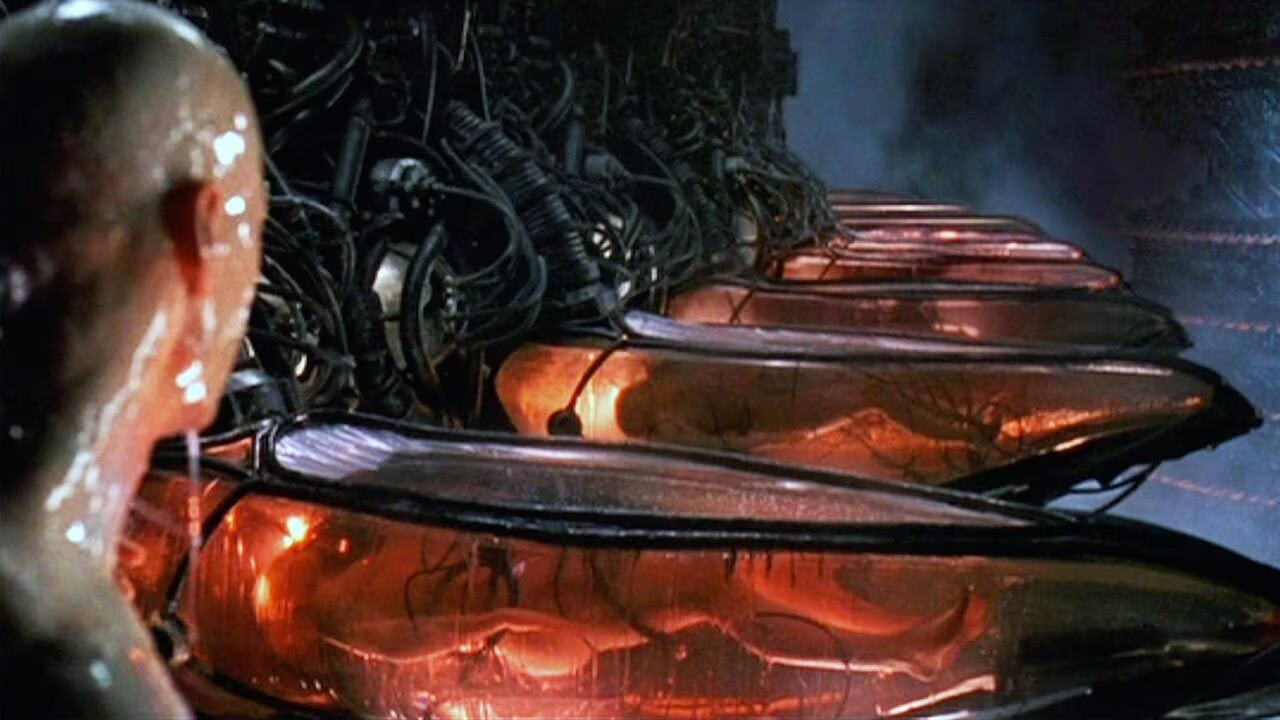
Your second prison may or may not be a computer simulation, but your first prison was most certainly biological. And you escaped it violently, flushed down a birth canal, just like Neo.
However, our matrix prison doesn't end at birth.
Inside your body right now is a lattice-like network called fascia, sheets and webs of connective tissue binding everything together. Healthy, hydrated fascia looks like a wet net, a matrix that binds.
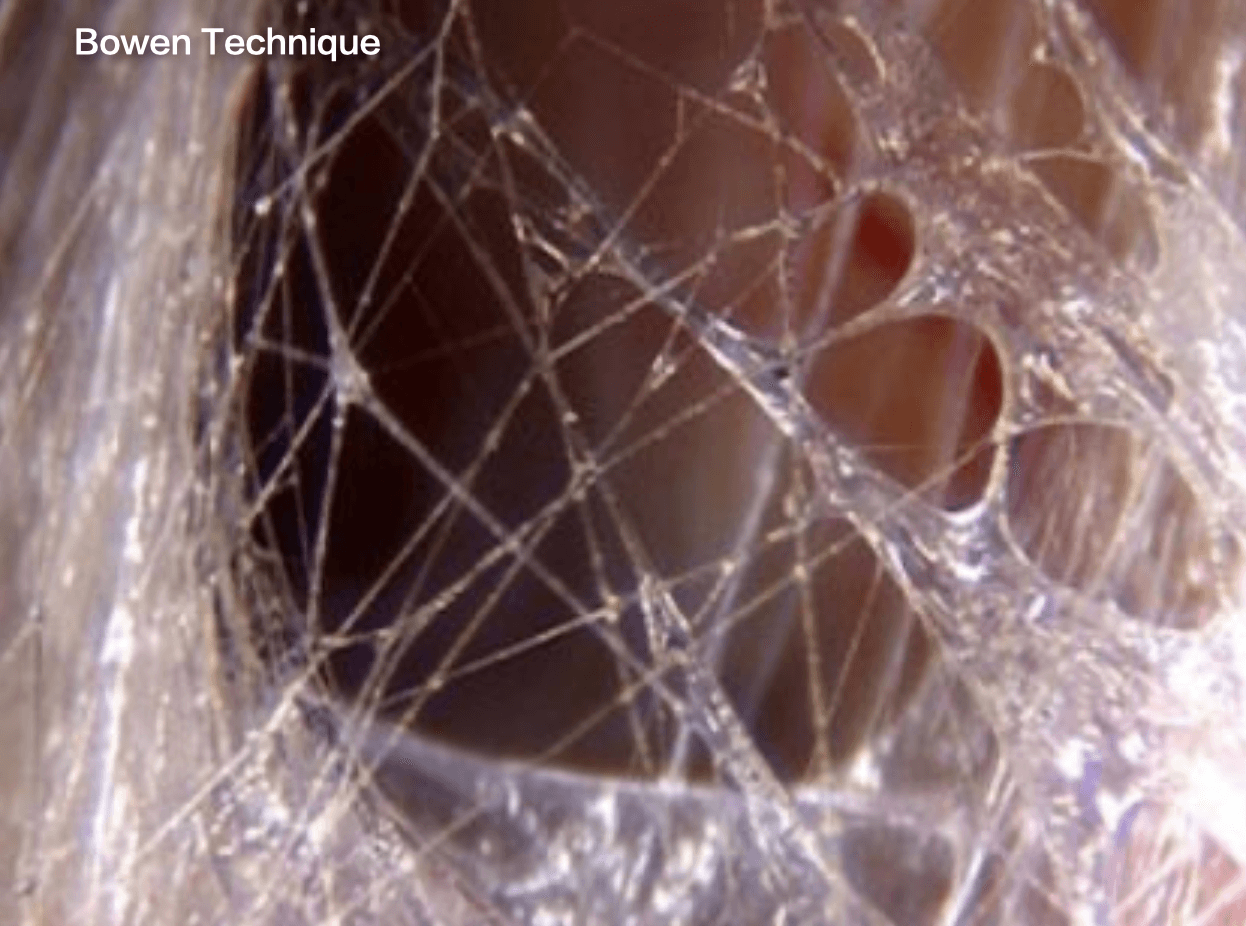
The slimy membrane around Neo in the pod-womb is a bridge between these two meanings of matrix: the biological womb and the digital construct. And the robot that unplugs him, shaped like a spider, is almost certainly a nod to the arachnoid layer of the meninges, the spiderweb-like structure covering the brain.
We are bound by matrices at every level. And yet, our bondage is what gives us our mobility. We’re free to move around in the larger network of reality, and it's our internal fascist prison that gives us ambulation: “...it is the mesoderm which is the origin of fascia, skeletal, cartilage and muscle, all components which are associated with locomotion.” (The Fascia Guide, fasciaguide.com) Walking allows us to move, to travel.
Both The Matrix and 2001: A Space Odyssey feature a pivotal scene in which the characters move or travel into a simulated room. In The Matrix, Morpheus loads two red leather chairs and an old television into a sterile white construct. In 2001, David Bowman ends his journey in a French provincial bedroom with an underlit white floor.
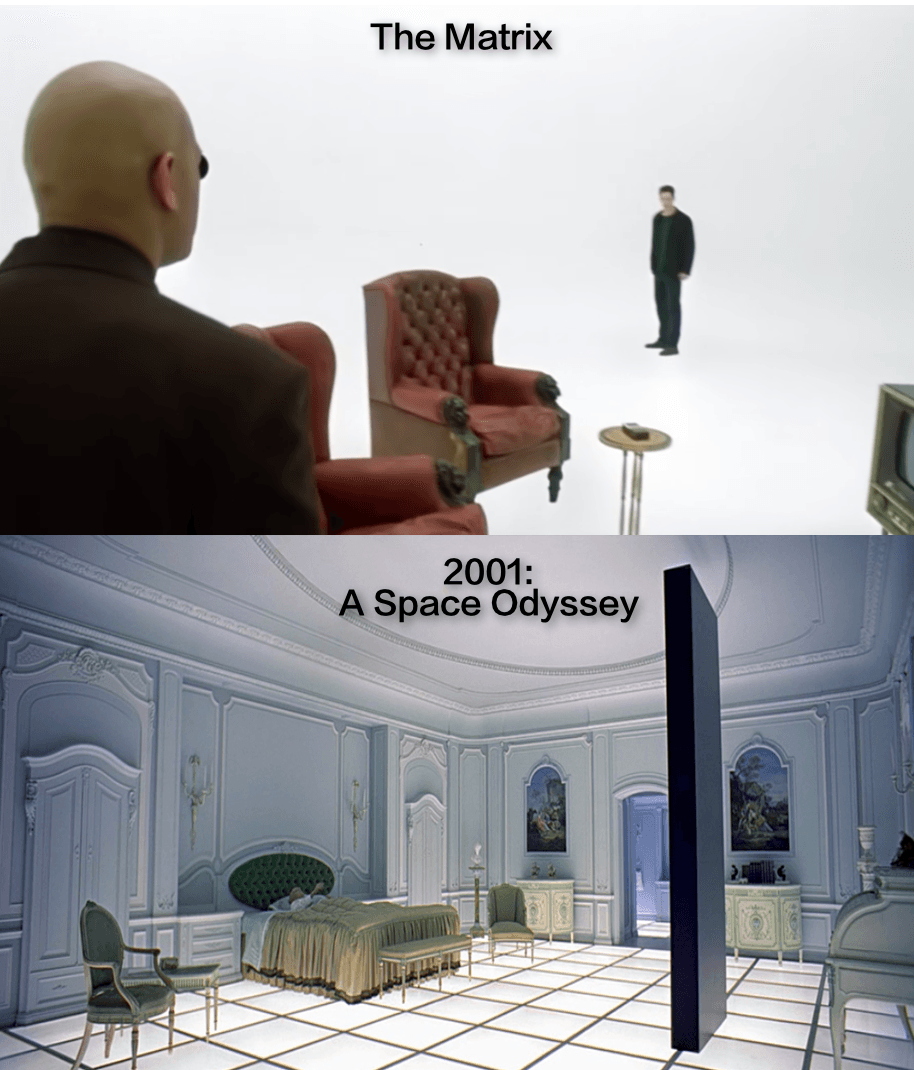
These rooms symbolize the same thing: the thalamus of the brain, an ancient Greek word meaning "room." The thalamus regulates motor signals, consciousness, attention, and awareness. It's what determines, as Morpheus puts it, what is real. He asks Neo, "How do you define real? If you're talking about what you can feel, what you can smell, taste and see, then real is simply electrical signals interpreted by your brain." Those signals are interpreted first by the thalamus. In relation to the hypothalamus, this room is the proverbial upper room.
Clarke gives us the monolith's dimensions as the ratio of 1 to 4 to 9. However, the actual dimensions Clarke gives us are 5 feet wide by 11 feet tall. These don't precisely reflect the ratio of 4 to 9. To be exact, the monolith would need to be 11.25 feet tall, and Clarke wasn't known for such mistakes.
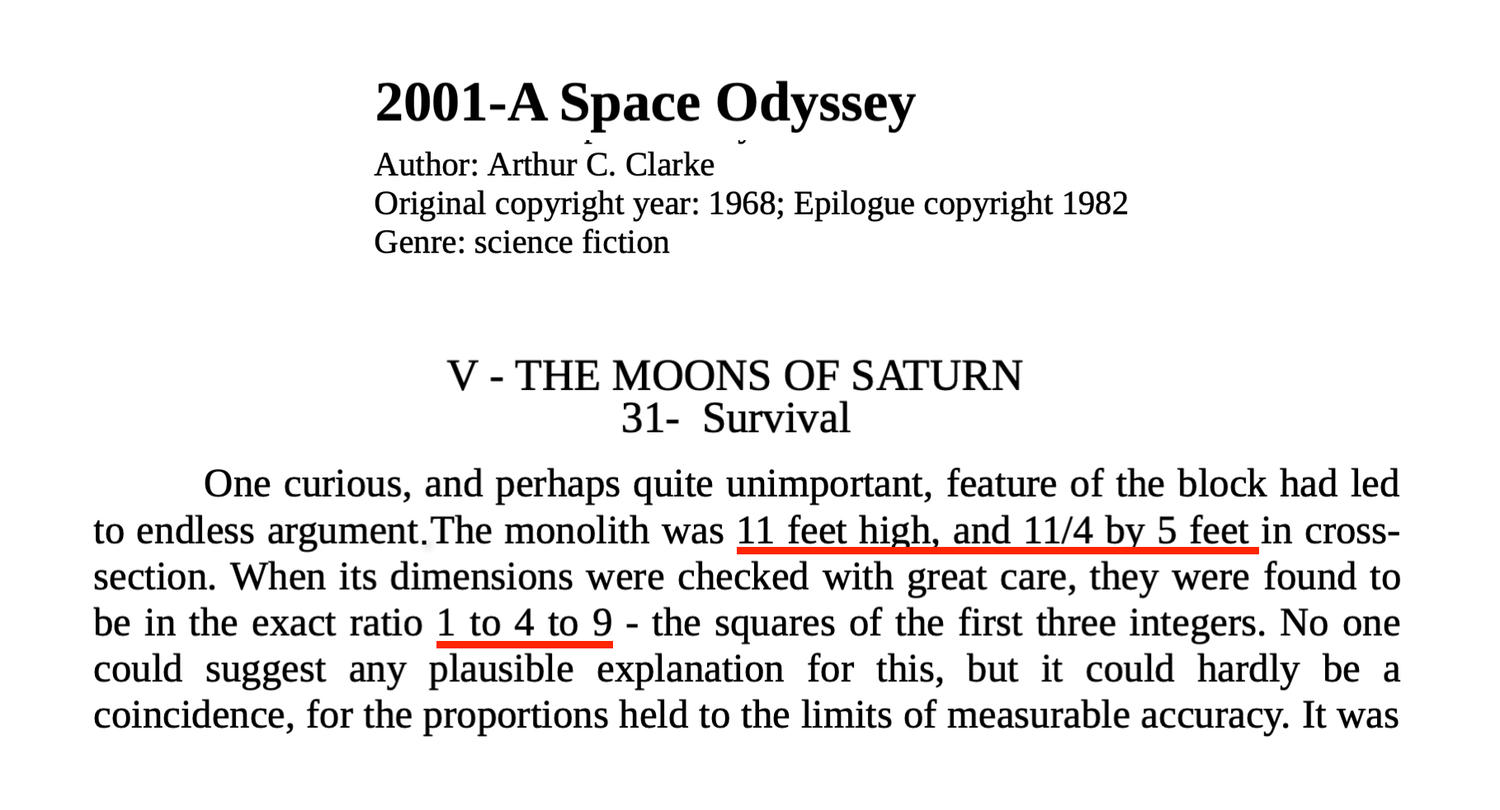
I think Clarke was doing what Francis Bacon often did: using a deliberate error to flag something important. He wanted 4, 9, and 5 in the same breath. And if you know my work, you know that the pairing of 4 and 5 keeps showing up in the Circle of 5ths, in the Solfeggio, and even in physics.
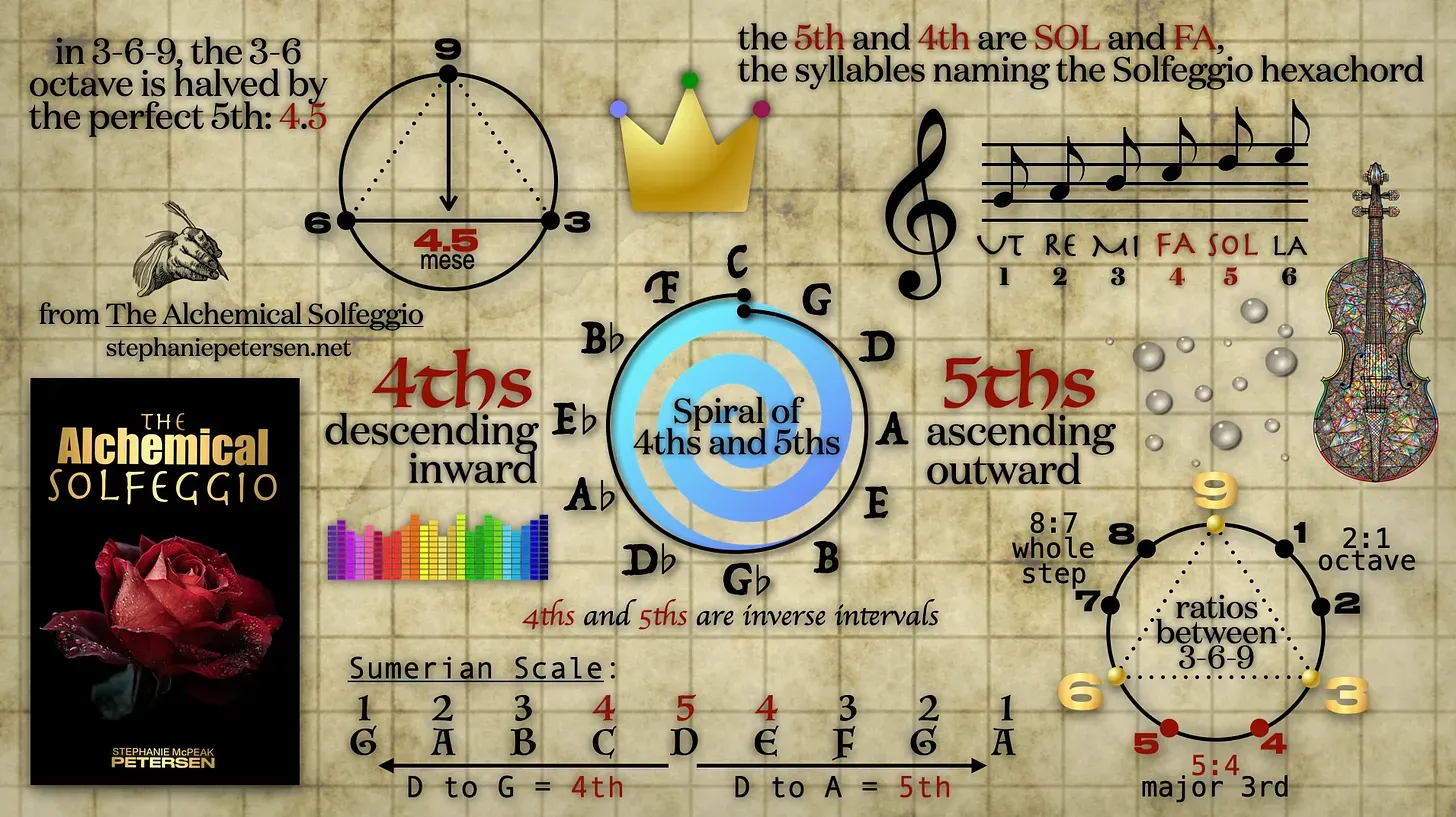
In my book The Alchemical Solfeggio, chapter 12 is called "The 4/9ths Reduction." The title refers to the work of physicist Harold Puthoff; in his 1989 paper on gravity as a zero-point fluctuation force, he identified a dimensional reduction factor of 4/9ths. This was the amount by which matter appears to lose mass when moving in two dimensions rather than three.
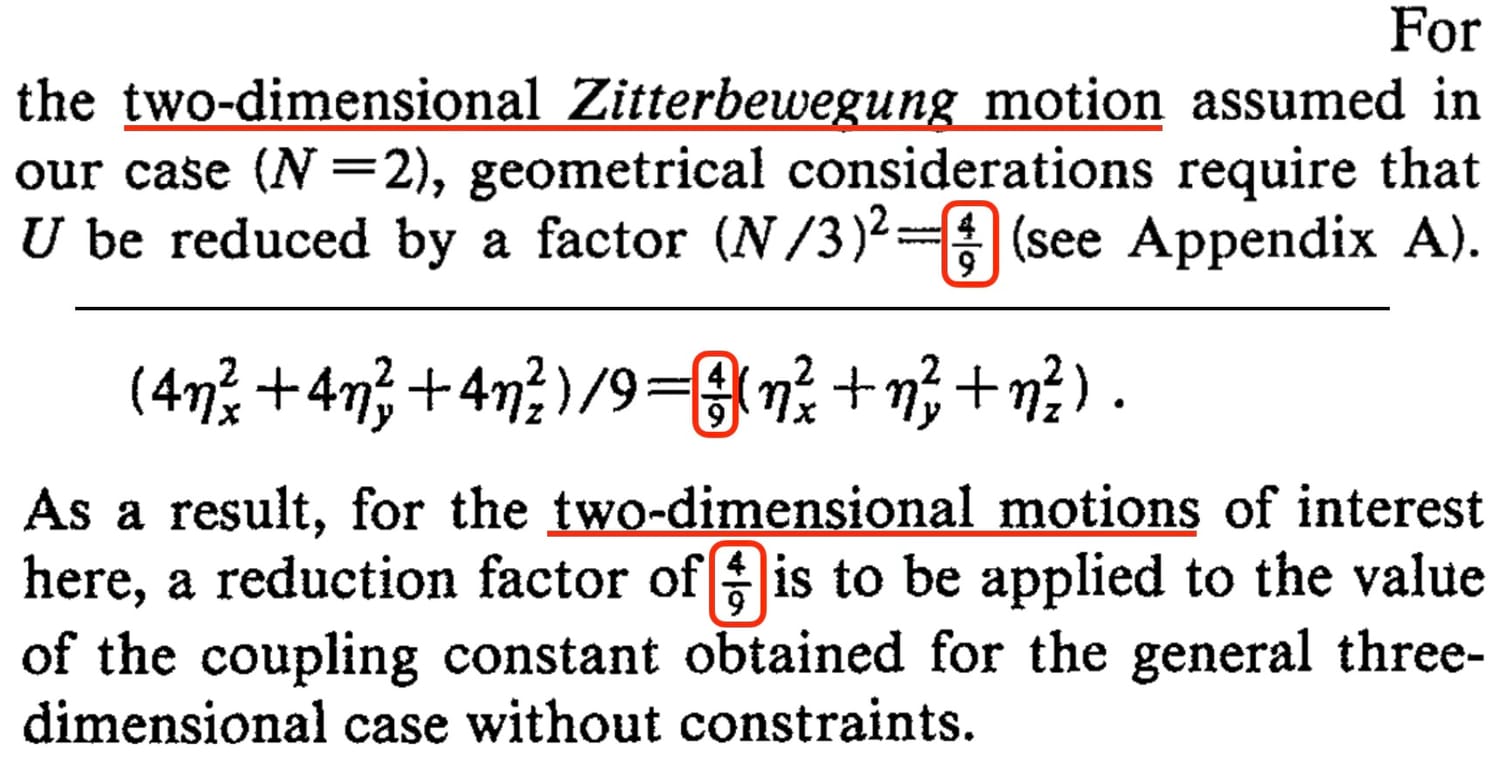
David Hudson cited Puthoff's work to explain something extraordinary he had witnessed. Hudson was heating a substance he called "monatomic," matter reduced to single atoms. When heated, the sample vanished. But his equipment still registered its presence at 5/9ths of its original weight.
In other words, 4/9ths of its mass had gone somewhere else. This fraction can also be expressed as the ratio 4 : 9, as it's expressing the same proportions.
Hudson asked the question directly in one of his lectures: "So where did the 4/9 go? It's still there. It's just not in these three dimensions."
And Clarke, writing decades earlier, seems to have anticipated this. Near the end of the novel he writes: "How naive to have imagined that the series ended at this point, in only three dimensions."
Something was able to slip the bonds of the matrix, just as Clarke seems to be describing with regard to David: "The vision, or illusion, lasted only a moment. Then the crystalline planes and lattices, and the interlocking perspectives of moving light, flickered out of existence, as David Bowman moved into a realm of consciousness that no man had experienced before." David Bowman was free, just as David Hudson's sample was temporarily free, and both achieved this freedom in the context of a ratio, 4 : 9.
The matrix is biological, fascist, neurological, and mathematical. It's the womb, the body, the brain, and the fabric of three-dimensional space.
Clarke hid a number in plain sight, and mentioned it three times, because he wanted someone to find it. I think he knew that the ratio 1 : 4 : 9 pointed beyond this dimension and that the story of escaping the matrix is much more literal than a science fiction tale.
If this connects to work you've been doing, or questions you've been looking at, I'd love to hear about it in the comments. And if you'd like to go deeper, the link below will take you to The Alchemical Solfeggio that covers Hudson, Puthoff, and the 4/9ths -- 5/9ths signature in much more detail.


Stephanie McPeak Petersen
Join me on deep dives into Shakespeare, Francis Bacon, harmonics, economics, and hidden history.


My husband Allan's website:
Stay connected with my updates delivered straight to your inbox.