
The Tartar Woman: Battle Wives
(This article is also available as a video.)
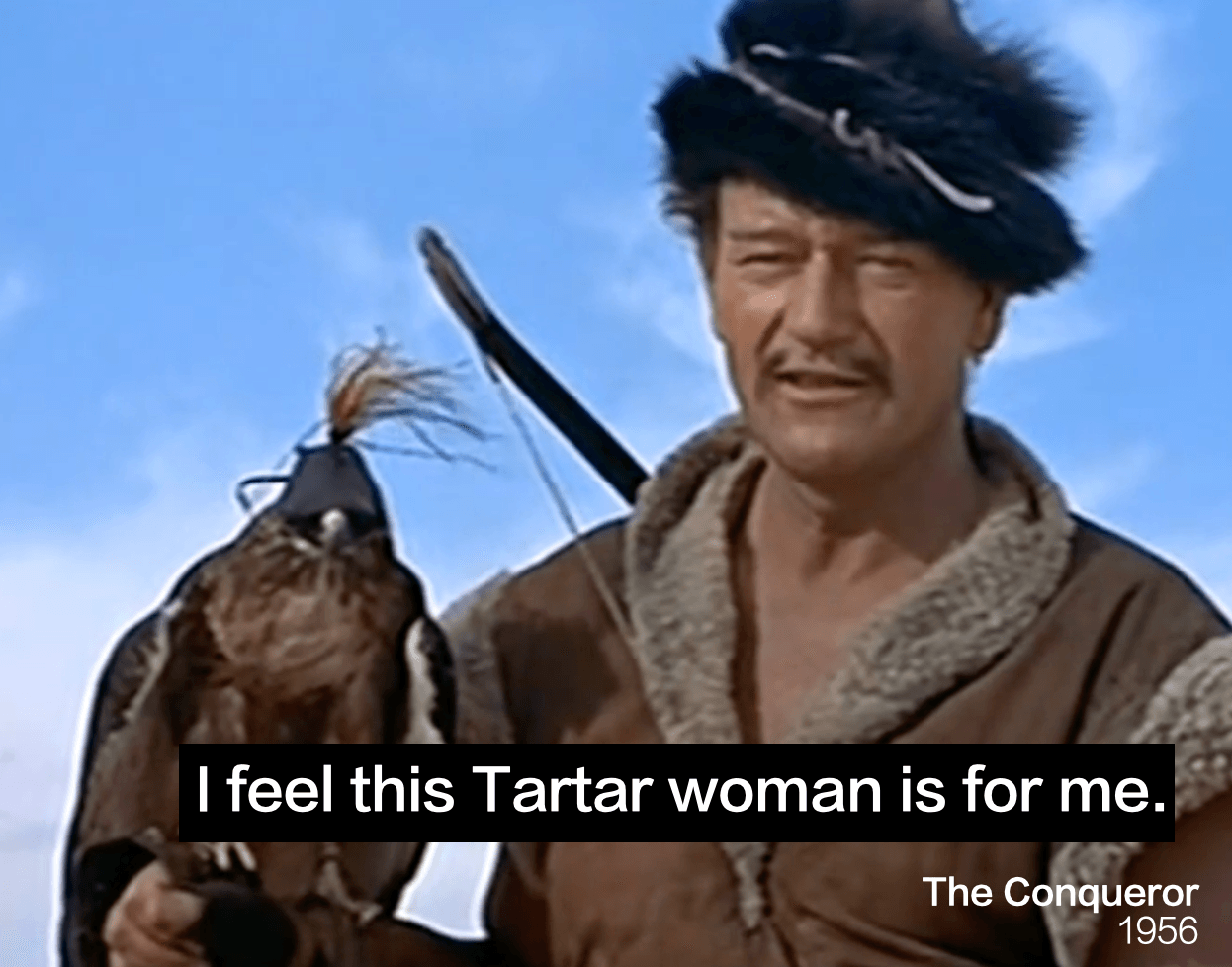
“I feel this Tartar woman is for me.”
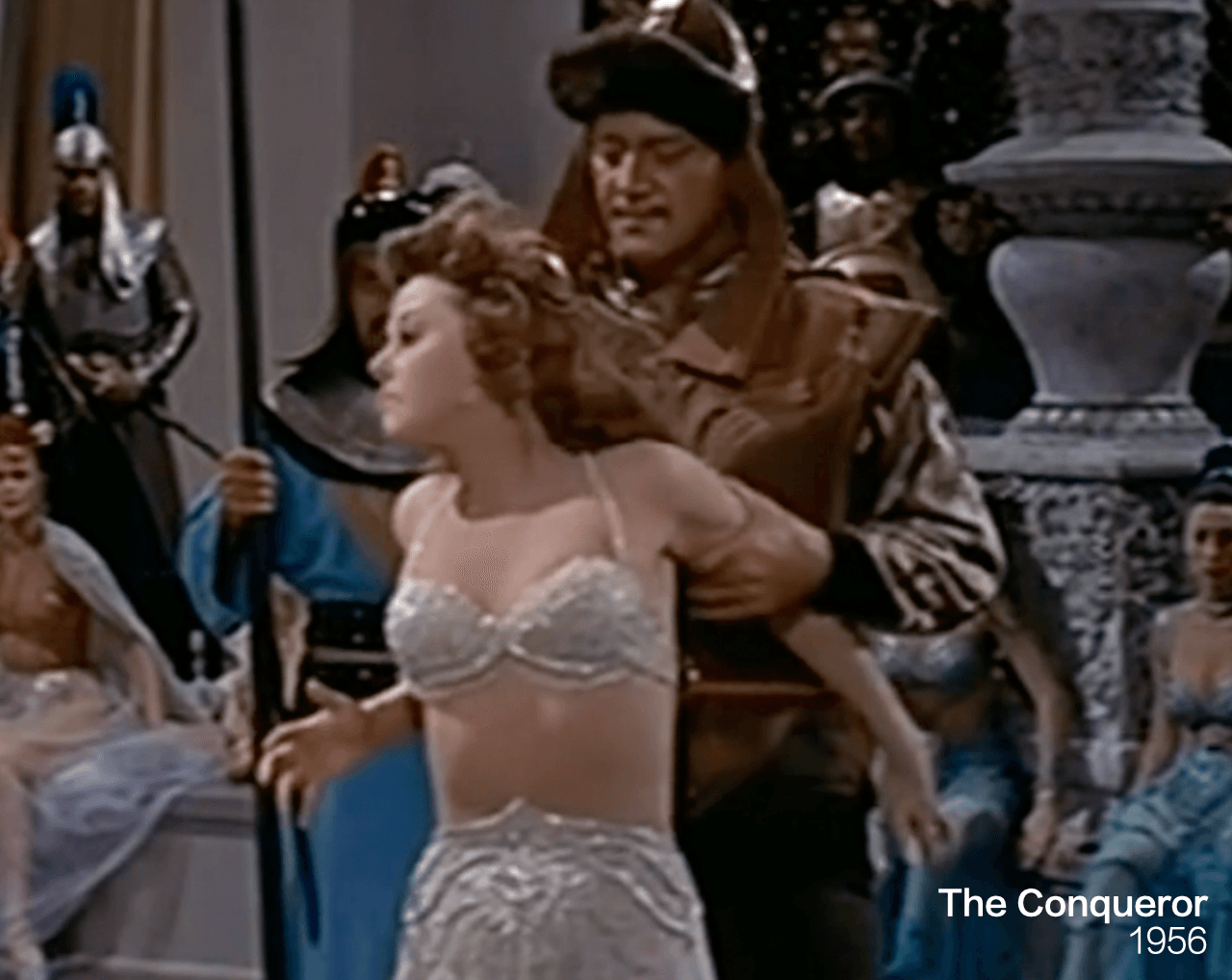
That’s a line delivered by John Wayne in the worst movie ever made, The Conqueror from 1956.
In the film, Wayne played Temujin, the man who would become Genghis Khan, and in real life, Khan did marry two Tartarian women after defeating and absorbing the Tartars into his empire. The iconic symbol of the “Tartar woman” was key to the success of her medieval culture.
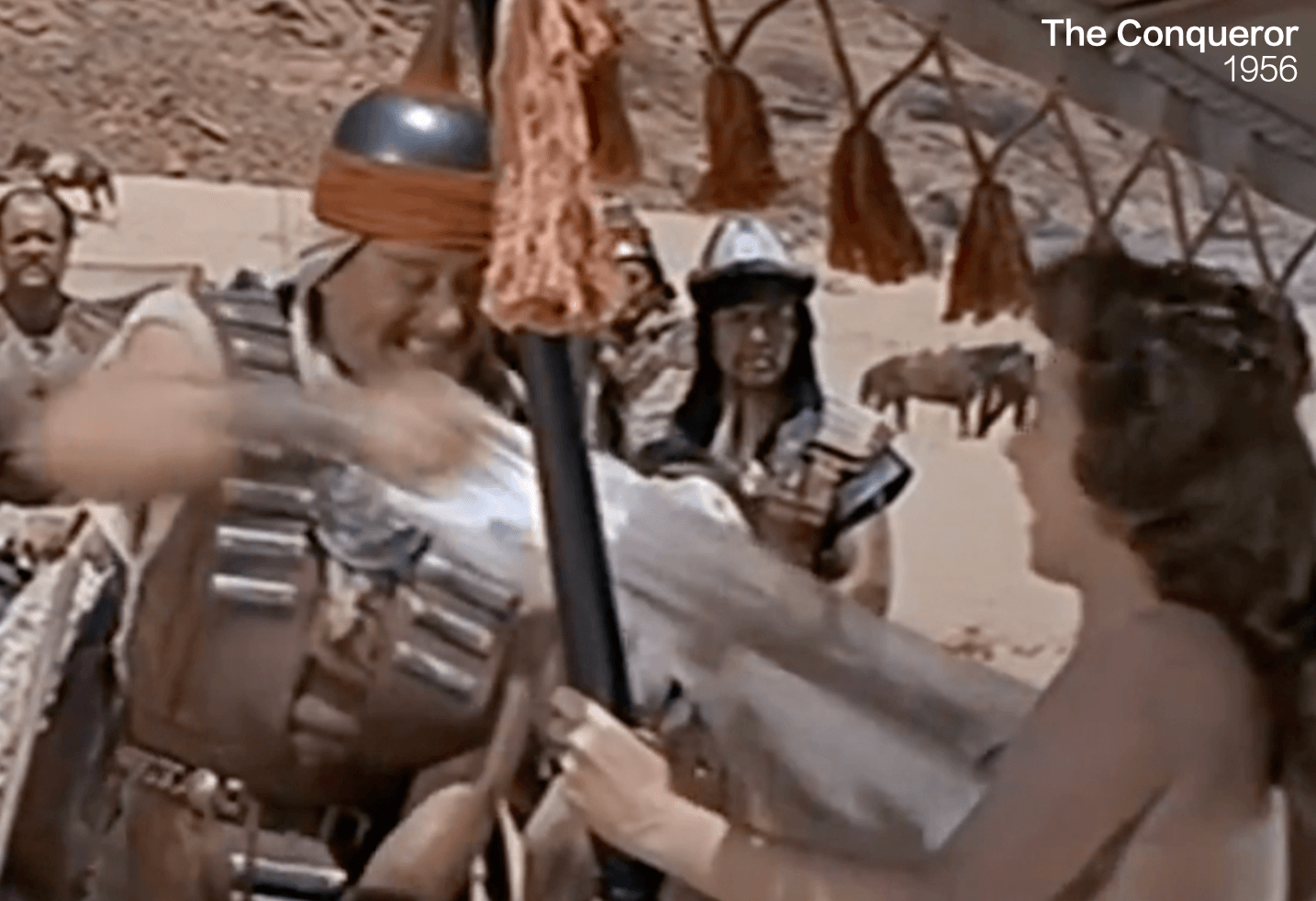
And it’s her symbol of strength that Hollywood denigrated in this movie, as shown below when Temujin rips off her dress.
We’ve been told that Tartaria is a fringe internet theory, but the economic foundations of the Tartarian argument appear in Wealth of Nations, written by Adam Smith in 1776, which is assigned reading in every economics program in the world.
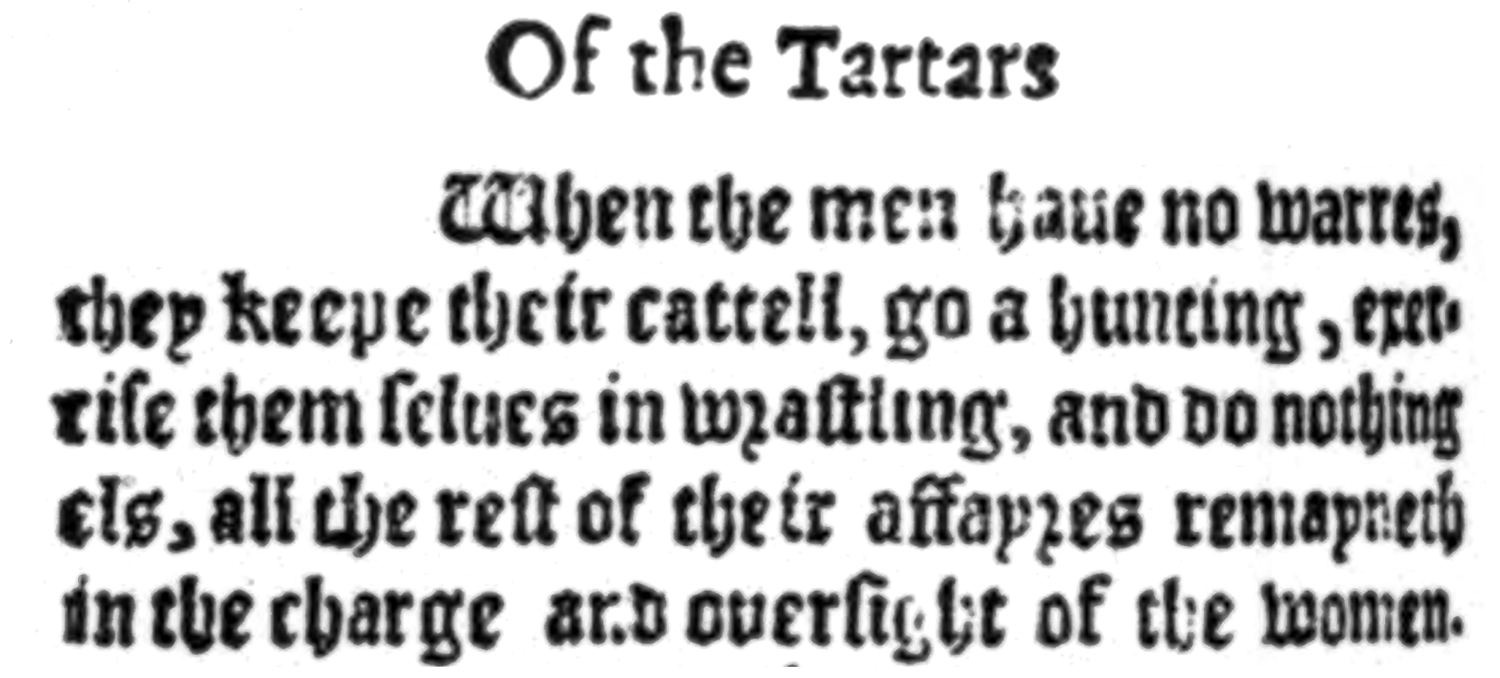
Other credible sources on Tartaria exist, as well. In 1580, an English merchant named John Frampton reported back on daily life in Tartaria for the Muscovy Company that wanted to open trade routes there. One detail Frampton noted was that, “When the men have no warres, they keep their cattell, go a hunting, exercise themselves in wrastling, and do nothing else, all the rest of their affayres remayneth in the charge and oversight of the women.”
The Tartars were nomads who constantly traveled to find new grazing areas for their herds of cattle. They lived in mobile tents, and entire Tartar families moved around with their cattle together, on what 1950s America might have called a permanent camping holiday.
Adam Smith, focusing on the wealth of nations, believed this was key to understanding the success of Tartarian conquests while the wealth of other warring nations tended to decline.
War was the largest expense for a European nation, but Smith explained that war wasn’t an expense at all for Tartaria: “The ordinary life, the ordinary exercises of a Tartar or Arab, prepare him sufficiently for war. Running, wrestling, cudgel-playing, throwing the javelin, drawing the bow, &c. are the common pastimes of those who live in the open air, and are all of them the images of war. When a Tartar or Arab actually goes to war, he is maintained by his own herds and flocks which he carries with him in the same manner as in peace. His chief or sovereign… is at no sort of expence in preparing him for the field; and when he is in it the chance of plunder is the only pay which he either expects or requires.”
It cost Tartaria nothing to go to war.
The cattle the Tartars were still herding while at war may seem like a burden to be lugging around, but those herds were the balance sheets of the Tartarian civilization. The ancient understanding of cattle as wealth is something I present in a free graphic essay (PDF). Their definition and use of wealth was radically different from ours, and understanding it will reframe everything we’re about to cover.
War, for civilized countries, was much more expensive. Daily life there was lived in fixed locations: on stable farms and settlements. When men were conscripted for war, they left their normal day jobs to be performed by the women who stayed at home, like Rosie the Riveter in World War II.
Free War vs. Taxpayer-Funded War
Soldiers in more advanced societies had to be paid to fight in a war. They also had to be supplied with food, clothing, weapons, and ammunition, as well as transported to the theater of battle. So it’s no surprise that the Europeans would describe this expensive process as “waging war.” War certainly involves wages and the expense of war is a burden historically paid by the taxpayer. The phrase originates from Middle English, derived from the Anglo-French wagier (to pledge or gage) and related to the Medieval Latin wadium. The medieval knight was pledging his military support to a lord who agreed to pay what amounted to “wages” in the form of a manor and fields when he wasn’t out on military campaign. Wadium (also spelled vadium) is a medieval Latin noun meaning a pledge, stake, security, or wager. It is derived from the Frankish Germanic word wadja. In legal contexts, it refers to a promise secured by bail, and it is the root of the modern word “wage” and the term “mortgage” (mortuum wadium). In effect, to “wage war” was to mortgage a war: it required massive, long-term funding.
And it’s primarily to fund war that nations tax their people. Adam Smith looked at four types of societies and what war cost each of them. For hunters, war was free but armies tended to be smaller. For shepherds like the Tartarians, war was also free and their armies were larger. For agrarians, war became expensive and funded by those who stayed at home. And for the commercial nations, war was the most expensive of all.
In comparison with a Tartarian civilization in which nearly everyone was a soldier, Smith calculated that ancient Greece (agrarian) had only between 20 and 25 percent of the population fighting as soldiers. In the commercial nations of Europe, he calculated that only 1 percent of the population could be maintained as soldiers without ruining the country paying for them. The decrease from near 100 percent of the Tartars to 25 percent of the Greeks to 1 percent of Europeans is a measure of how far “civilization” had drifted from the Tartarian model, and how large the tax bill had grown.
In the medieval Tartar world, nothing was abandoned by men who were fighting in wars because they brought their entire lives with them to the battlefield, including their wives. “When such a nation goes to war, the warriors will not trust their herds and flocks to the feeble defence of their old men, their women and children; and their old men, their women and children, will not be left behind without defence and without subsistence. The whole nation, besides being accustomed to a wandering life, even in time of peace, easily takes the field in time of war.” (Smith, Book V)
The Tartar woman didn’t require protection. In fact, according to Smith, “Among the Tartars, even the women have been frequently known to engage in battle.” The John Wayne film shows knowledge of this, as the women performed their seductive dances while exhibiting their sword skills. This is the opposite of European chivalry, where women were considered damsels in constant distress.
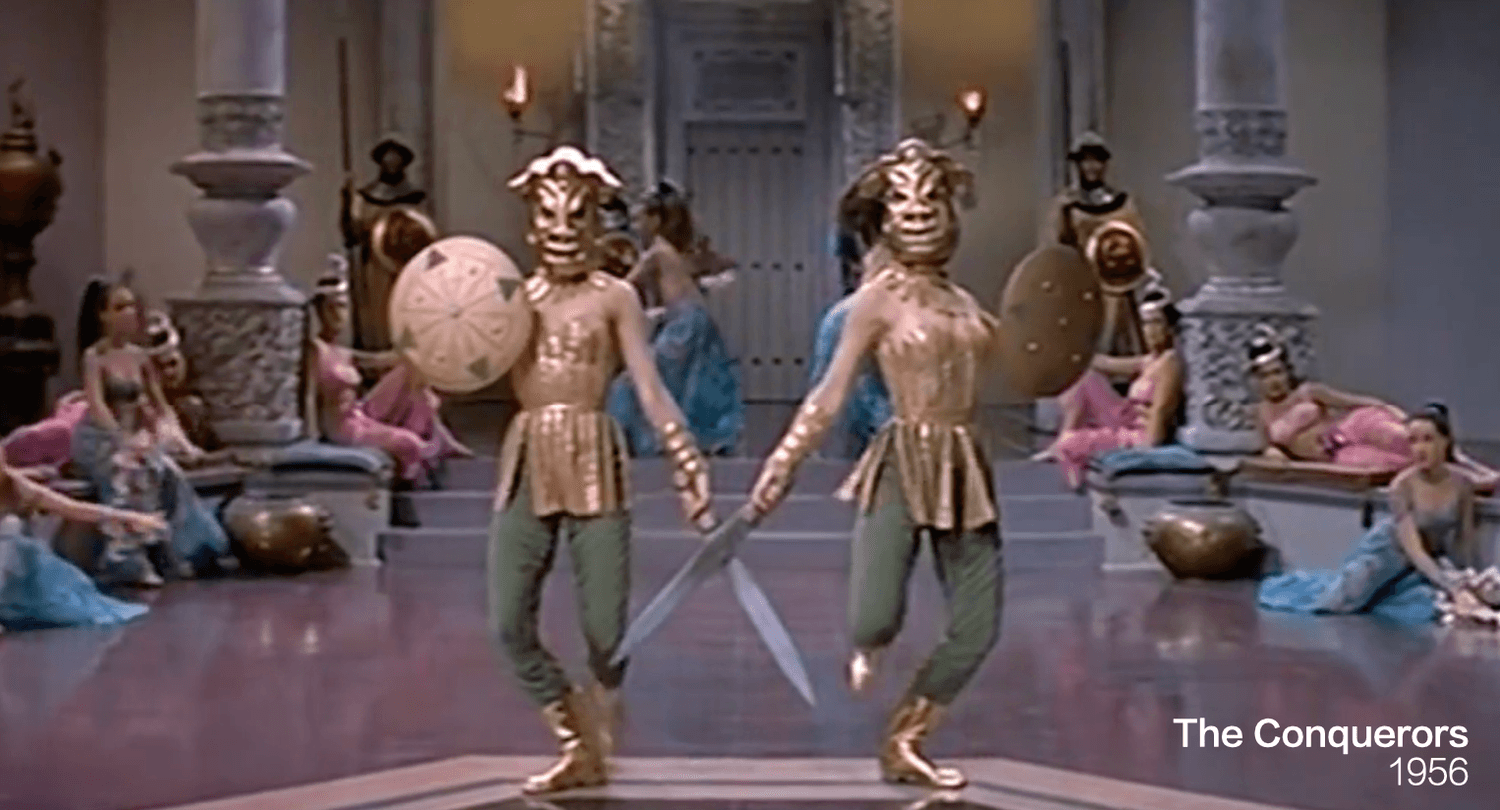
The Tartar woman was the reason Tartarian war was free: she required no support, she contributed to the fighting when necessary, and she kept the entire domestic and economic enterprise running without interruption, which meant the clan carried its full productive capacity into battle rather than leaving it vulnerable at home.
For this reason, the 1950s Hollywood propaganda machine snuffed out the Tartar woman’s symbol of strength.
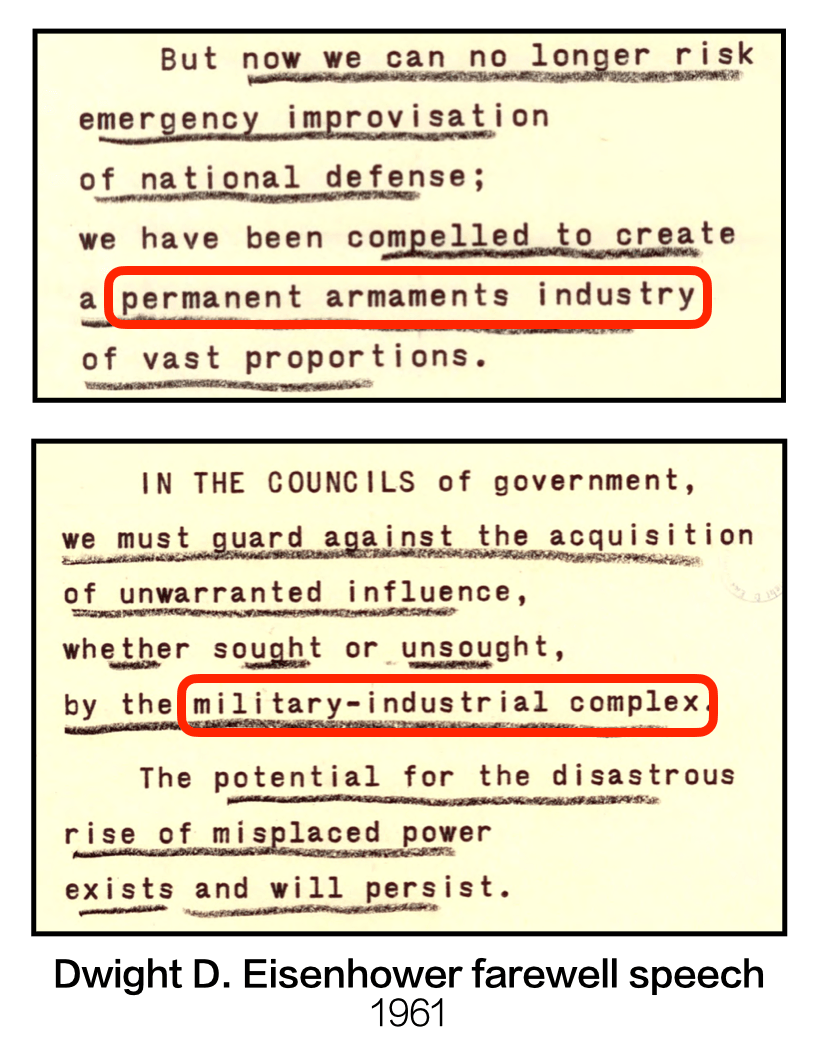
This was the decade when the American military industrial complex was being fully fleshed out, what Eisenhower described in 1961 as a “permanent” industry. To gain acceptance for this permanent and ever-growing industry, the population had to view national defense as a “hell” that was well beyond their own capabilities.
That shift in thinking started with a movement away from strong females. It was necessary to fully domesticate women, to turn them into delicate, pampered damsels, and that was easily accomplished using the glamour of Hollywood. The 1950s was the era that saw the housewife shift from the woman killing a chicken in the backyard for dinner to a woman eating bon-bons on the couch.
1950s Learned Helplessness
After the American female had been transformed, it was time to feminize the white-collar American male. Adam Smith had already laid out instructions on how to do that: “In the progress of the division of labour, the employment of the far greater part of those who live by labour, that is, of the great body of the people, comes to be confined to a few very simple operations, frequently to one or two… The man whose whole life is spent in performing a few simple operations… has no occasion to exert his understanding or to exercise his invention in finding out expedients for removing difficulties which never occur. He naturally loses, therefore, the habit of such exertion, and generally becomes as stupid and ignorant as it is possible for a human creature to become.”
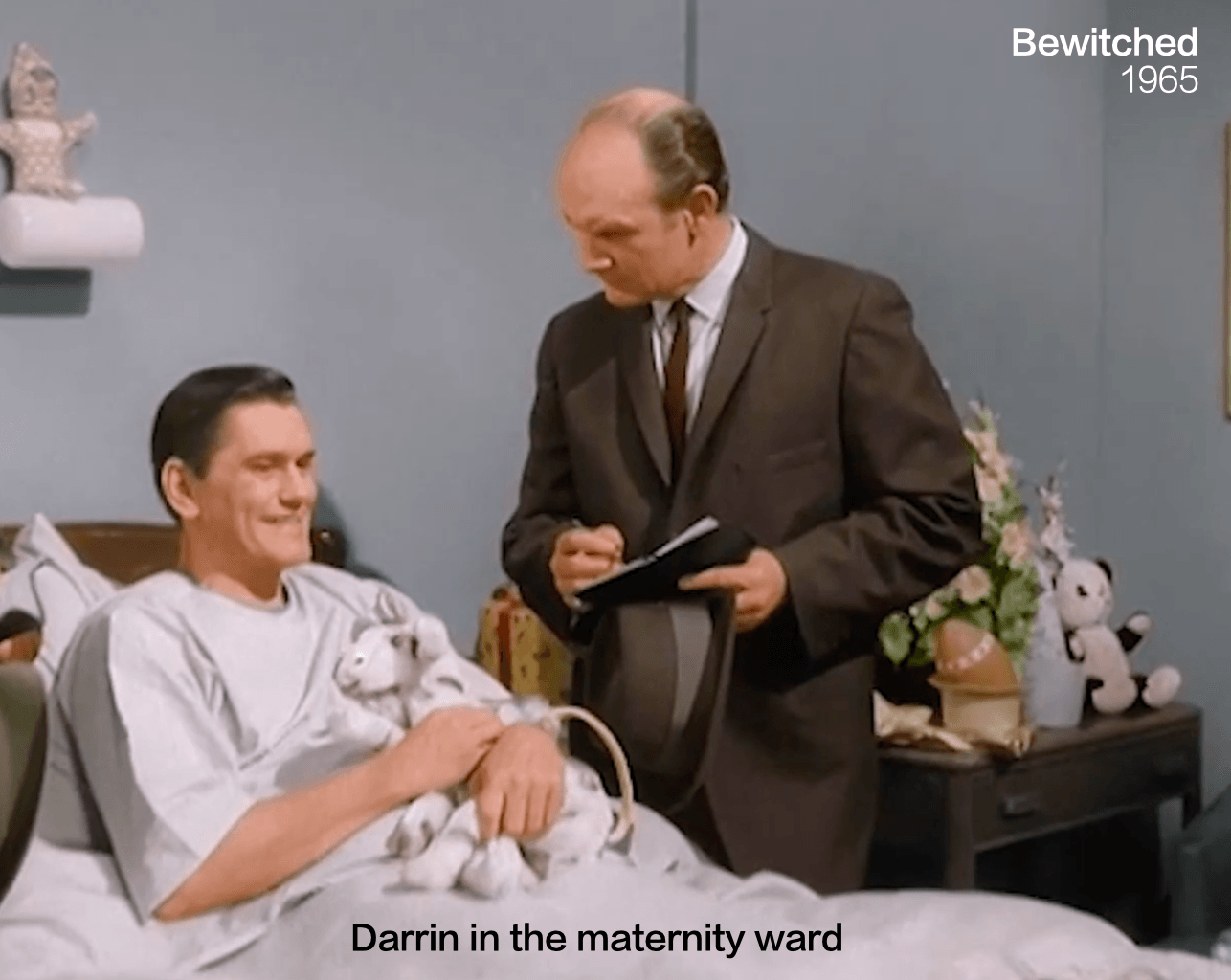
Smith was describing Ozzie Nelson, Rob Petrie, and Darrin Stephens to a T and middle-class suburbia subsequently lost every survival skill that homo sapiens had acquired over millennia. These men now hunted in grocery stores and “wrastled” on tennis courts.
And the management of cattle was handled by the factory farm well outside of town.
Smith continues: “Of the great and extensive interests of his country he is altogether incapable of judging, and unless very particular pains have been taken to render him otherwise, he is equally incapable of defending his country in war. The uniformity of his stationary life naturally corrupts the courage of his mind, and makes him regard with abhorrence the irregular, uncertain, and adventurous life of a soldier. It corrupts even the activity of his body, and renders him incapable of exerting his strength with vigour and perseverance in any other employment than that to which he has been bred. His dexterity at his own particular trade seems, in this manner, to be acquired at the expence of his intellectual, social, and martial virtues. But in every improved and civilized society this is the state into which the labouring poor, that is, the great body of the people, must necessarily fall, unless government takes some pains to prevent it.”
The U.S. federal government will never take pains to prevent this. Learned helplessness is a pre-condition for its permanent war machine. It’s now a feature rather than the bug Adam Smith warned against. Government has always claimed that it’s necessary for national defense, but Tartaria disproves this claim, and it’s just one of many reasons its legacy has been removed from modern history textbooks.
In Part 2, we’ll take a look at how Hollywood, and Howard Hughes specifically, fully transformed the Tartar woman.



Stephanie McPeak Petersen
Join me on deep dives into Shakespeare, Francis Bacon, harmonics, economics, and hidden history.


My husband Allan's website:
Stay connected with my updates delivered straight to your inbox.